FREE STANDARD SHIPPING ON ALL BOXES

Luxury Gift Boxes vs DIY Hampers: Which Is Better?
There is something genuinely appealing about the idea of making a gift yourself. Assembling a hamper from scratch — choosing each product individually, wrapping it beautifully, adding a personal note — feels like an expression of care that a purchased gift cannot replicate. The intention behind it is almost always good. The reality, for most people, is somewhat more complicated. The question of whether a luxury gift box or a DIY hamper makes a better gift is not as straightforward as either camp would have you believe. The honest answer depends on the occasion, the recipient, the time available, and — perhaps most importantly — what the person assembling the hamper is actually capable of pulling off well.
7/3/20264 min read
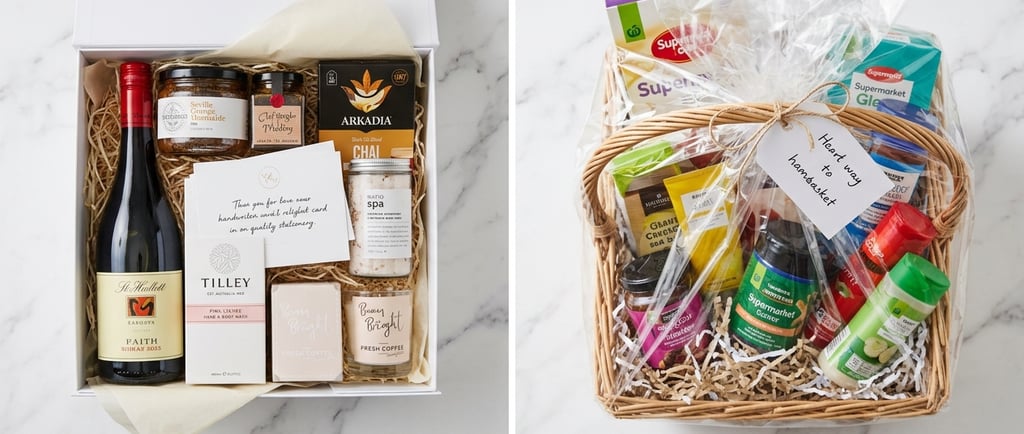
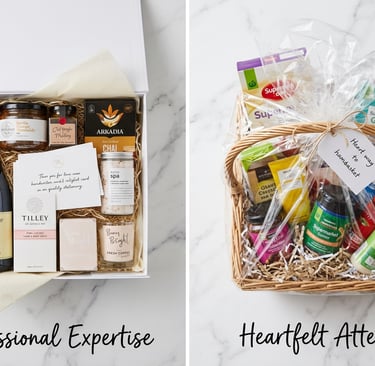
The appeal of DIY
The DIY hamper has genuine strengths that are worth acknowledging. When it is done well, a hamper assembled by hand communicates effort in a way that is immediately legible. The recipient knows that someone went to multiple shops, made deliberate choices, and put time into the presentation. That effort carries emotional weight.
DIY also offers complete flexibility. There is no product list to work within, no aesthetic template to follow, no minimum spend. A hamper built entirely around one person's specific tastes — her exact favourite chocolate, the tea she mentioned once six months ago, the small ceramic dish she admired in a shop window — can achieve a level of personalisation that a curated box may not always match.
For people with a genuine eye for curation, good relationships with local producers, and enough time to do it properly, a DIY hamper can be extraordinary. The key phrase there is doing it properly.
Where DIY tends to fall apart
The problem with most DIY hampers is the gap between the intention and the execution. Assembling something that looks genuinely beautiful and cohesive is harder than it appears. Products chosen from different sources at different price points rarely sit together naturally. Packaging is expensive and difficult to source in small quantities. The basket or box itself often looks cheaper than anticipated. The final result, despite genuine effort, can feel like a collection of things rather than a considered gift.
There is also the time cost, which is rarely accounted for honestly. Sourcing products from multiple locations, finding appropriate packaging, assembling everything, and presenting it in a way that looks intentional can easily consume an entire afternoon. For most people, that time has a real value — and when the result falls short of what they envisioned, the investment feels particularly painful.
The other variable is shelf life and food safety. A DIY hamper assembled with perishable items needs to be delivered promptly and stored correctly. Products chosen without attention to their interaction — strong-smelling items next to delicate foods, for example — can affect each other in ways that are only discovered on opening.
What a luxury gift box actually offers
A properly curated luxury gift box solves most of the problems that make DIY hampers difficult without sacrificing the qualities that make them appealing.
The curation is done by someone whose entire focus is on the combination of products, the aesthetic coherence, and the quality of the presentation. The packaging is designed specifically for the purpose — not adapted from something else. The products are chosen to work together, to represent a consistent standard of quality, and to arrive looking exactly as intended.
For the recipient, the experience of opening a well-made gift box is quite different from opening a DIY hamper. Everything has been considered. Nothing is there by accident. The presentation communicates that the sender valued the occasion enough to choose something genuinely excellent.
For the sender, the experience is also different. The decision-making is simpler, the outcome is more predictable, and the time investment is a fraction of what a well-executed DIY hamper would require.
The Australian-made difference
One dimension of this comparison that often goes unexamined is the quality of the products themselves. DIY hampers tend to draw from whatever is available at accessible retail locations — supermarket premium ranges, gift shop staples, products chosen for their recognisability rather than their quality.
A luxury gift box built around Australian artisan products introduces the recipient to things they would not have found on their own. Small-batch chocolate from a maker who produces limited runs. A hand-poured soy candle from a Sydney studio. A ceramic piece made by an artisan who sells primarily through boutique stockists. These products carry a story and a craft that mass-retail alternatives cannot replicate, and that difference is felt by the person receiving them.
The gap between a supermarket premium product and a genuine artisan product is significant. In a DIY context, bridging that gap requires knowing where to find the latter and being willing to pay for it. In a curated gift box, the sourcing work has already been done.
When DIY still wins
There are contexts where a DIY approach is genuinely the better choice, and it is worth being honest about them.
When the relationship is close enough that the effort itself is part of the gift — when a parent assembles something for a child, when a close friend builds a box around a shared history — the personal touch carries meaning that a purchased box cannot fully replicate. The slight imperfection of something made by hand can be part of its charm.
When the giver has access to specific products that hold personal significance — something from a place they both know, a product the recipient mentioned specifically, an item with a story attached to it — a DIY approach allows those choices to be incorporated in a way that a curated box does not.
And when the giver genuinely enjoys the process, has the time to do it well, and has the eye to pull it together beautifully, a DIY hamper can be extraordinary. The caveat is that all three conditions need to be true simultaneously — and for most people, in most circumstances, they are not.
Neither approach is universally better. What matters is which one is going to result in a gift that the recipient experiences as genuinely considered and beautifully presented. For most people, most of the time, a properly curated luxury gift box achieves that outcome more reliably — and with considerably less stress — than a DIY hamper assembled under pressure.
Modern Gift Co
For the Moments That Matter
© 2026 Modern Gift Co. All rights reserved.
FAQ

ABN 40 313 203 612