FREE STANDARD SHIPPING ON ALL BOXES
How to Choose the Perfect Gift Box for Someone Who Has Everything
There is a particular kind of gift-giving anxiety that arrives when the person you are shopping for genuinely wants for nothing. They have good taste, a comfortable home, and a habit of buying themselves whatever they need before anyone else gets the chance. They are grateful for everything and impossible to surprise. You love them, and you have absolutely no idea what to get them. This is one of the most common gifting challenges, and it is worth taking seriously. Because the answer is almost never to spend more money. It is to think differently about what a gift is actually for.
6/19/20263 min read
A gift is not a transaction
When we shop for someone who already has everything, we tend to approach it as a problem of inventory. They have candles, so we can't give candles. They have nice skincare, so that's out. They already own a great coffee machine, so coffee feels redundant. We eliminate options until we are left with nothing and a rising sense of panic.
The issue with this approach is that it frames the gift as an object to be acquired rather than an experience to be created. The people who are hardest to buy for are usually the ones who are very good at acquiring objects for themselves. What they are less likely to give themselves is a moment — a reason to stop, to feel appreciated, to enjoy something they did not see coming.
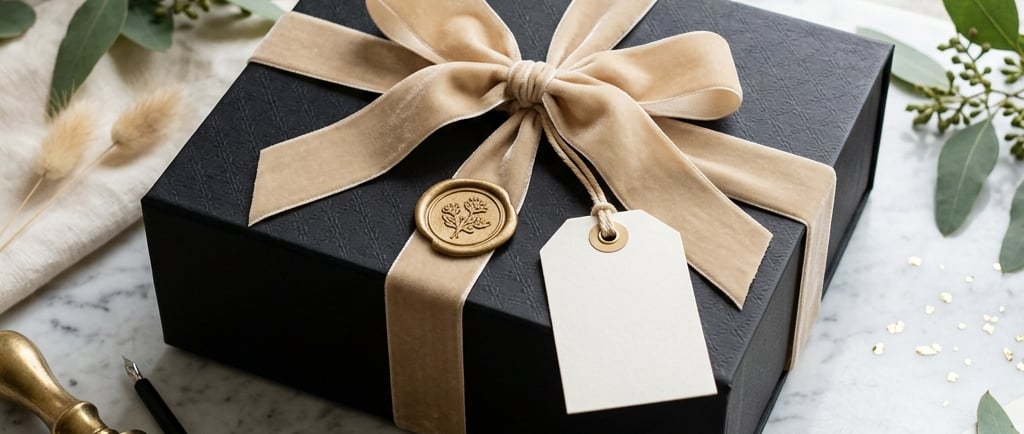
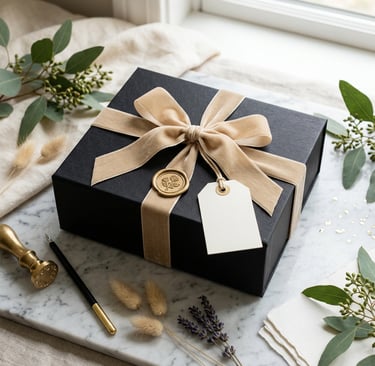
This is why a thoughtfully curated gift box often works where a single product fails. It is not asking whether they need another candle. It is creating an experience around the candle — the chocolate alongside it, the tea that pairs with it, the card that explains why you chose each thing. The sum becomes something entirely different from its parts.
Choose the experience, not the item
The most useful question to ask when buying for someone who has everything is not what do they need but how do you want them to feel when they open it. That question leads somewhere far more interesting.
Do you want them to feel indulged? Build a box around slowness and comfort — things that encourage them to take an hour for themselves. A hand-poured soy candle, a premium tea blend, an indulgent chocolate, a luxe body product they would consider excessive to buy themselves.
Do you want them to feel celebrated? Choose products that feel genuinely special — a sculptural homewares piece they would admire in a shop but never purchase, something handmade by an Australian artisan, a keepsake they will still have years from now.
Do you want them to feel known? This is where the real thought goes in. What do they actually love, beyond the obvious? Not their favourite colour — their favourite Saturday morning ritual. Not their job — what they do to decompress after it. A gift built around a specific detail you have noticed will always land harder than one built around a general preference.
Why Australian artisan products work so well
One of the reasons locally made products have become so popular in gifting is that they solve the "they already have everything" problem quite naturally. Most people, regardless of how much they own, have not tried honey from a small Queensland apiary or soap hand-thrown by a ceramicist in regional New South Wales. Australian artisan products introduce the recipient to something genuinely new — and because the products are beautifully made, they feel like a discovery rather than a filler item.
There is also something in the story behind the product that adds to the experience of receiving it. Knowing that a candle was poured by hand, that a chocolate bar was made in small batches, that a serving board was crafted from reclaimed timber — these details give the recipient something to talk about, to share, to return to. They transform an object into a conversation.
Let go of the price point
The other trap we fall into with hard-to-buy-for people is assuming we need to spend significantly more to impress them. In reality, the opposite is often true. A box of five beautifully chosen Australian products at a considered price point will create a stronger impression than a single expensive item selected without thought.
What matters is the curation — the sense that someone took time to assemble these particular things for this particular person on this particular occasion. That effort is visible in the result, and it is what people actually remember.
The person who has everything does not need more things. What they need — what all of us need, really — is to feel that someone thought about them carefully enough to get it right. A gift box built around that intention will always be the right choice, regardless of what is already on their shelves.
Modern Gift Co
For the Moments That Matter
© 2026 Modern Gift Co. All rights reserved.
FAQ
ABN 40 313 203 612